
Článek
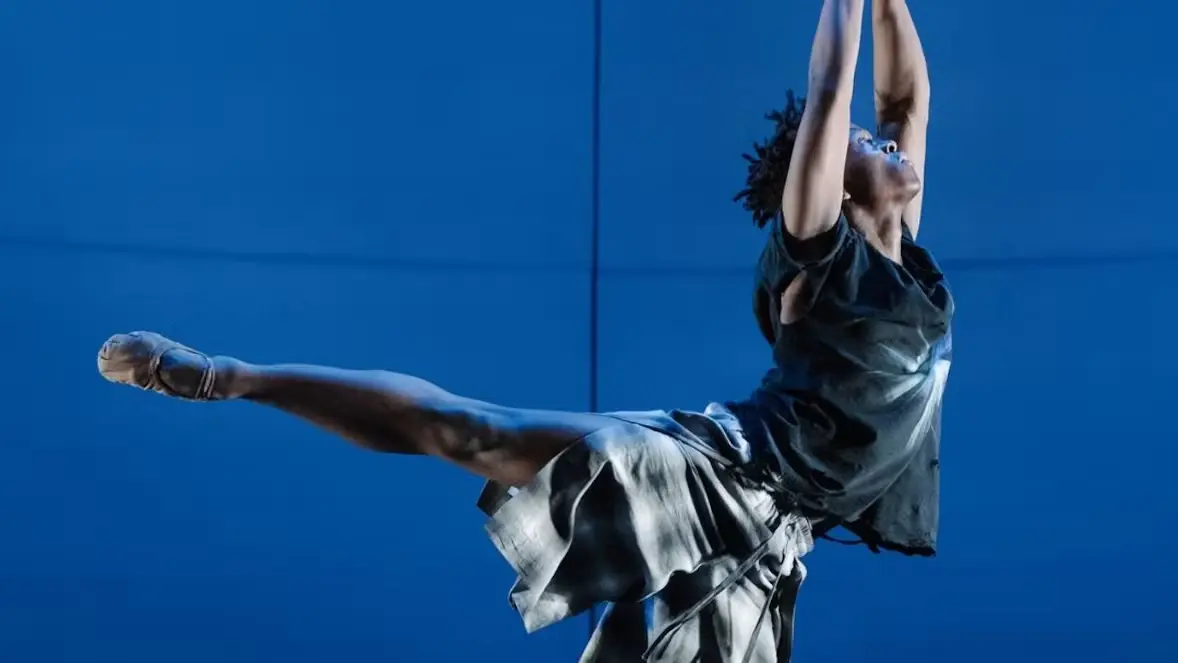
Last weekend, Siphe November took his final bow with the National Ballet of Canada, as MADDADDAM ended its run at the Four Seasons Centre for the Performing Arts in Toronto.
Inspired by Margaret Atwood’s trilogy of the same name, the ballet featured November as its principal dancer, a position that he’s held since 2021. Even before then, he’s been making waves thanks to the precise control and confidence he demonstrates onstage. But this coming August, November will leave Toronto to join the Dutch National Ballet as a soloist.
We've included some highlights below, edited for length and clarity. For the full discussion, listen and follow Commotion with Elamin Abdelmahmoud on your favourite podcast player.
WATCH | Today's episode on YouTube:
Elamin: What makes Siphe such a special dancer?
Martha: I think, first and foremost, it's his presence. He's one of those performers that when you get him on stage, you want to watch him. And I think that's for a number of reasons.
He's incredibly musical. He's really good at embodying a rhythm. He grew up studying a form of dance called kwaito, which is a very intricate hip-hop South African street dance. So he's really sensitive to music. He can render it with incredible detail in his physicality — it makes him really exciting to watch. And then you add his confidence to that — he's incredibly confident. He's clearly a performer who likes to be there on stage. And that ease [in] performing lets him have a kind of playful rapport with either his partner or with the audience.
You get this sense that he is pushing himself when he's performing. You know it's eventful, he's not just going through the motions and that he could surprise himself. He'll surprise the audience. It feels like anything could happen. And that's really cool with contemporary choreography, but even more cool with classical stuff. Ballets that have been around for 150 years — he's suddenly imbuing it with new life.
Elamin: Siphe rocketed through the different levels of fame here at the National Ballet. He moved here from South Africa at the age of 11 to attend the National Ballet School on a full scholarship, famously bypassed apprenticeship, got a contract straight after high school, [and was] promoted to principal dancer at just 22 years old.
Syrus, would you describe what it's like to watch Siphe on stage?
Syrus: It is just this presence, this incredible focus, that Siphe draws.
We all are watching to see this dancer move through the stage. Siphe moves like water — like their whole body moves and flows like water. And you can tell their sort of history with social dance, with dance in their community. And the ways that we kind of move into the pelvis and have that kind of real lubrication of the joints and that real kind of physicality.
You know, Siphe is under 5 '11. They're a dark-skinned Black dancer who is captivating on stage. The way that they have height, the physicality of their movement, the sheer presence of their body, it is breathtaking. You cannot take your eyes off of Siphe when he dances.
Elamin: Syrus, what do you feel Siphe’s legacy is here, and how do you hope the National Ballet moves forward from this moment?
Syrus: I think Siphe has given us a different idea, a different understanding of who can be [in] a leading role. I think that we've seen other dance companies — the Dance [Theatre] of Harlem comes to mind — where we've seen tall mismatched couples, including women, doing lifts and power lifts.
And I think for the National Ballet of Canada, this was an opportunity to see a different kind of leading role. I think that Siphe offers that for us. And I hope that for the National Ballet of Canada, they really think critically about the makeup of their company. Not only thinking about — of course — having dancers who are various heights and who are from different places around the world, but also to have that representation of Black dancers, to have representation of Black male dancers in the company able to offer a different story about perhaps who the lead is…