
Článek
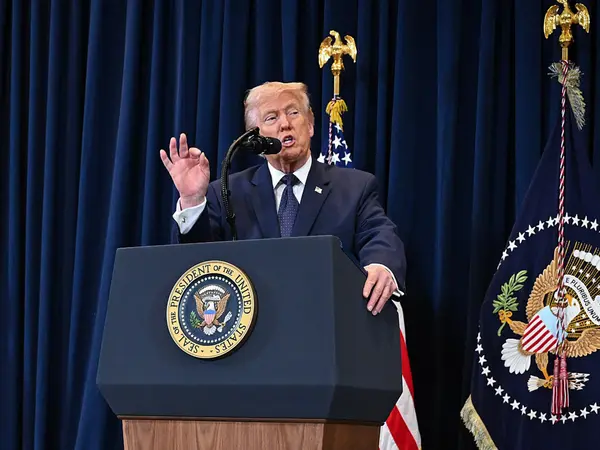
Early on February 28, the United States and Israel launched an attack on Iran, marking the start of what appears to be a far-reaching and open-ended war. President Donald Trump said the operation was meant to eliminate an „imminent threat,“ destroy Iran’s missile and naval forces, and ultimately encourage Iranians to overthrow their government. He later said the strike had killed Iran’s Supreme Leader Ayatollah Ali Khamenei, along with other senior regime figures.
Iran has since responded with retaliatory missile attacks on US, Israeli, and allied targets across the region. After weeks of military buildup, all signs point to a campaign far larger than recent clashes.
Politically, the moment seems to mark a sharp reversal for Trump.
After years of condemning the Iraq War and even branding himself the „peace“ candidate, he has now embraced the kind of regime change conflict he long criticized. Allies once praised him for avoiding new wars, including politicians like JD Vance, while contrasting him with past hawks like Hillary Clinton, who infamously backed the Iraq War as a senator. That record now collides with a war whose goals and consequences remain deeply unclear.
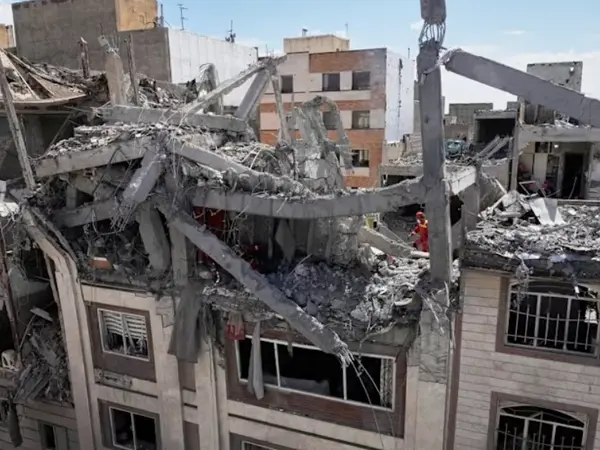
When the US and Israel first attacked, they targeted Iran's missile infrastructure, military sites and leadership in the capital, Tehran, and across the country.
Iran's Supreme Leader, Ayatollah Ali Khamenei, who had led the country since 1989, was killed during the first wave of strikes. Israel's military say dozens more senior figures in the powerful Islamic Revolutionary Guard Corps (IRGC) were also killed.
Khamenei's son, Mojtaba Khamenei, was named as his successor on 8 March.
Other high-ranking Iranian officials killed include security chief Ali Larijani, intelligence minister Esmail Khatib and the head of the paramilitary Basij force, Gholamreza Soleimani. Israel says it targeted them in air strikes.
Who is Mojtaba Khamenei, Iran's new supreme leader?
The US and Israel have also targeted key sites linked to Iran's nuclear programme - which Iran insists is entirely peaceful - and Iranian oil and gas sites.
They include Kharg Island, home to a major oil terminal that is considered Iran's economic lifeline.
Israel also targeted South Pars, part of the world's largest natural gas field.
The US-based group Human Rights Activists in Iran (HRANA) reported on 29 March that 3,486 people had been killed in Iran since the war began – including 1,568 civilians, of whom at least 236 were children.
Iran accused the US and Israel of launching an attack on a girls' school near an IRGC base in southern Iran on 28 February, saying 168 people, including around 110 children, were killed