Článek
cosmological-density-fractal-model
Comprehensive summary of Martin's density-based and gravitational fractal cosmological model, including galaxy tree-like growth, star softness gradient, dark matter fractals, and particle formation mechanics.
Instructions
Martin's Cosmological Density & Gravitational Fractal Model
Core Philosophy & Framework
Martin's model unifies cosmology, physics, and natural geometry through non-mathematical logic, spatial density gradients, and fractal growth patterns (visualized as a „rennaissance / Leonardo-esque“ holistic system).
Key Components
1. Tree-Like Fractal Galaxy Growth ("Strom fraktálů")
- Galaxies as Inverted Trees: Galaxies function like trees growing inward toward the center of highest density/gravity rather than outward.
- Center / Trunk (Kmen): The galactic center/black hole has the highest density, thermal tension, and gravitational pull. It forms large, dense, hard fractal nodes and massive, short-lived, unstable stars.
- Branches / Arms (Větve a ramena): Form along continuous density lines (hustotní linie). Gravity and rotation cause these branches to spin/curl into spiral arms.
- Outer Edge / Fine Twigs (Jemné větvení na okrajích): Further from the center, density gradient and tension are lower. Growth is slower, gentler, and finer.
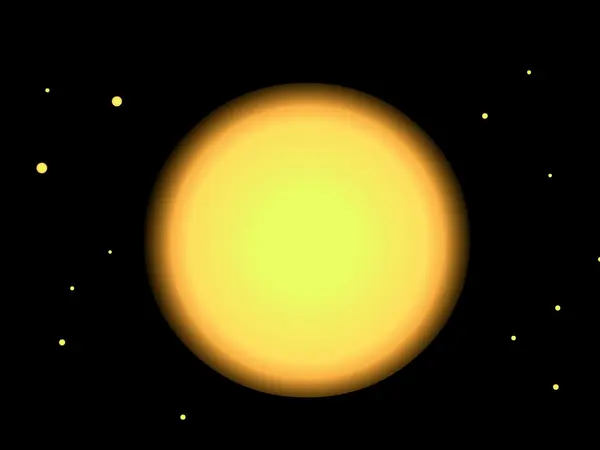
- Star Softness Gradient (Měkkost hvězd):Outer edge: Soft, small, long-lived, quiet stars (e.g. red dwarfs) formed via gentle fractal accretion without aggressive super-explosions.
Inner core: Hard, massive, unstable stars prone to repeated bursts/explosions.
2. Pre-Matter Fractal Dark Matter (Předhmotná fraktální temná hmota)
- Serves as the structural framework and building material of the universe.
- Forms subtle fractal nodes along density lines that aggregate under gravity.
- Re-arranges around density anomalies, explaining recurring star explosions and nebular structures.
3. Particle Mechanics (Protons and Neutrons)
- Protons: Formed near high-density centers as heavily baked/compressed, hard fractal knots with high EM tension.
- Neutrons: Formed when baked fractal nodes are released/pushed from high-density centers and attach/stick ("nalepí se") to proton fractals during movement.
4. Gravitational & Mathematical Bridge
- The model translates into standard physical/mathematical logic via non-linear gravitational accretion (hierarchical clustering / DLA - Diffusion-Limited Aggregation).
- Larger fractal nodes exert stronger gravitational pull ($F = G \frac{m_1 m_2}{r^2}$), accelerating "gravity scuks" (shlukování) toward the center, naturally creating a gradient from fine outer twigs to a dense central trunk.
- Author copyright 2o26-Martin Mag